What is a backlink?
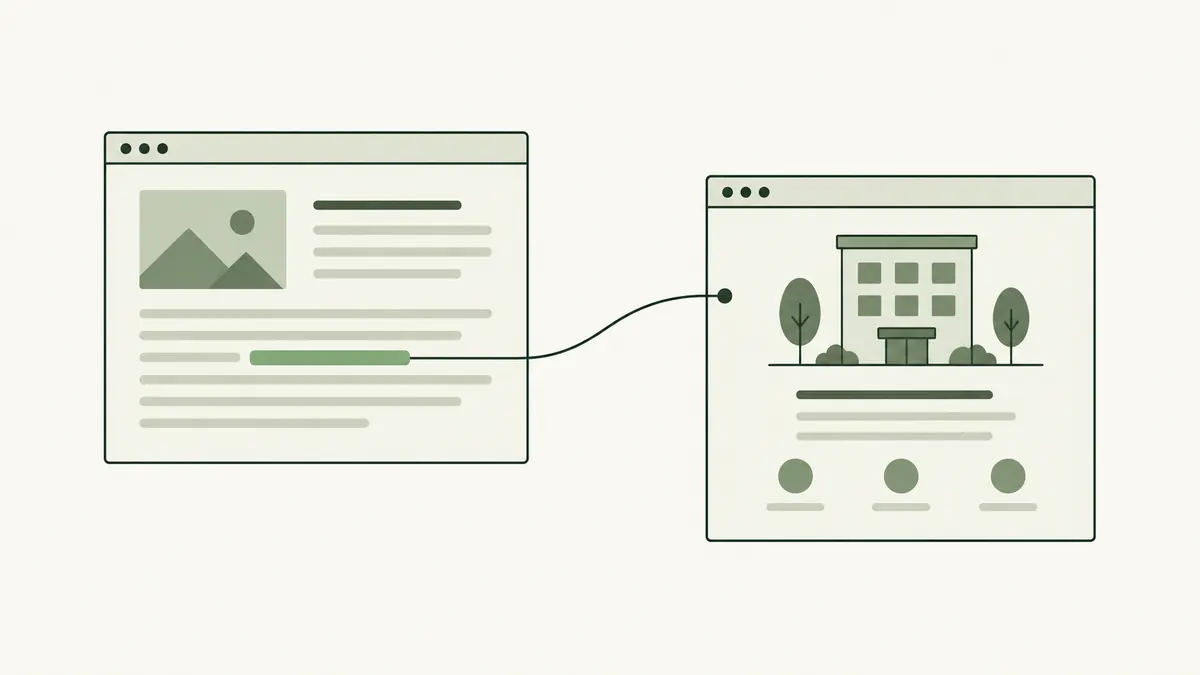
Imagine a food writer in Penang publishing a guide to neighbourhood bakeries. The writer mentions a bakery and includes a link to its menu. From the writer’s perspective, this is an outbound link. From the bakery’s perspective, it is a backlink.
A backlink is an incoming link from a page on another website to a page on your website.
A link from your own homepage to your own menu is different: that is an internal link. Both help people move between pages, but they connect different parts of the web.
How do backlinks work?
A reader clicks a link and arrives at its destination. Search engines can also follow links to discover pages and understand relationships between content. A backlink may point to your homepage, an article, a product or another specific page.
Discovery is not the same as indexing or ranking. Finding a page through a link does not guarantee that a search engine will include it in results or place it above other pages. Your content and the rest of your website still matter.
Why do websites link to each other?
Good links usually serve a purpose in the surrounding content. A writer might link to credit an original source, help a reader check a claim or introduce a relevant service or organisation.
A Malaysian business example
A local event organiser could link to a participating florist’s catalogue so attendees can see the available arrangements. The link makes the announcement more useful. Its value to the reader is clear even without thinking about search rankings.
This is a useful way to assess a potential mention: what can someone do or learn by following it?
What makes a backlink useful?
Consider the context around the link and the quality of the destination. A large link count, by itself, tells you very little about either.
- Relevant context. The linked page adds information that fits the topic.
- A clear destination. Readers can predict what they will find after clicking.
- A useful page. The destination loads, works on mobile and answers the reader’s question.
- An honest relationship. Paid placements are disclosed and use appropriate link attributes.
Third-party authority scores can be one research input. They are not Google’s own scores and cannot tell you what any individual link will do for rankings.
Dofollow vs nofollow
“Dofollow” is an informal name for an ordinary link without a qualifying relationship attribute. There is no need to add a rel="dofollow" attribute. Other attributes help explain the relationship behind a link.
| Link type | Typical use | Attribute |
|---|---|---|
| Ordinary link | An editorial reference | No qualifying attribute needed |
| Sponsored | Advertising or a paid placement | rel="sponsored" |
| User-generated | A forum post or comment | rel="ugc" |
| Nofollow | When other values do not fit and you do not want Google to associate your site with the destination | rel="nofollow" |
These attributes do not stop people from clicking. Google recommends sponsored for paid links; nofollow is also acceptable. See Google’s guidance on qualifying outbound links for details.
What is anchor text?
Anchor text is the visible, clickable wording of a link. In our bakery example, “a neighbourhood bakery” is the anchor text. It gives the reader a clue about the linked page.
Use wording that makes sense in the sentence. A brand name, the title of a resource or a brief description can all work. Repeating the same keyword phrase everywhere can make writing awkward and may be a sign of manipulative link building.
A contextual backlink simply appears within relevant surrounding content, such as the body of an article. That placement alone does not make a link useful or trustworthy.
Can backlinks harm a website?
Creating or buying links primarily to manipulate rankings can violate Google’s link-spam policies. Examples include automated link creation and excessive exchanges. Sites that violate spam policies may lose visibility or receive a manual action.
Advertising and sponsorship links should use rel="sponsored" or rel="nofollow". A paid article should not be treated as an ordinary editorial endorsement for ranking purposes.
Read Google’s link-spam policy before agreeing to a placement. A service promising guaranteed rankings or selling large quantities of unrelated links deserves careful scrutiny.
Do not assume that every unfamiliar link signals a problem. Review the context before taking action, and avoid making changes solely because a third-party tool applies a worrying label.
How backlinks fit into a wider SEO strategy
Think of links as connections to useful pages. If the pages themselves are unclear, outdated or difficult to use, more connections will not fix the underlying experience.
A sensible starting order
- Make your business information and core services easy to understand.
- Create helpful pages for the questions your customers actually ask.
- Check that visitors and search engines can reach those pages.
- Build relevant relationships and publish resources worth referring to.
For a small Malaysian business, a helpful first project might be improving a service page with clear delivery areas, product details and answers to common enquiries. Keep that foundation in mind as you explore the backlink guide library.