What does anchor text mean?
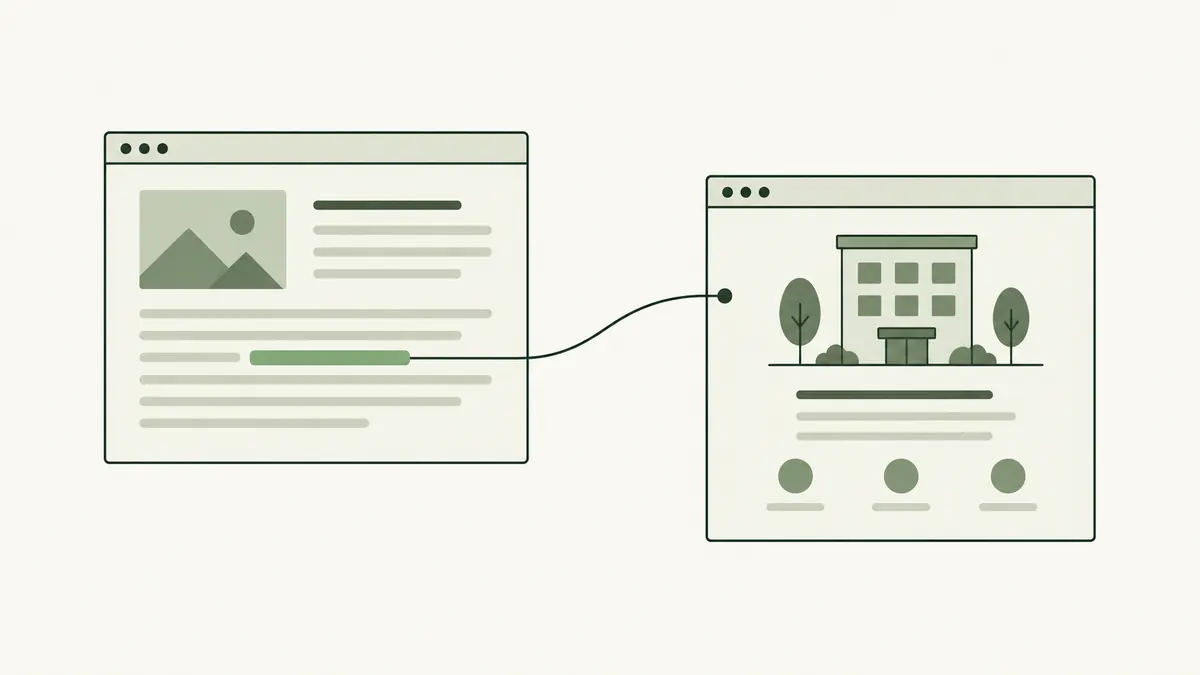
In the sentence “See our delivery areas before ordering,” the words “delivery areas” could be the clickable link. Those words are the anchor text. The address behind them is the destination URL. You can change one without necessarily changing the other.
The same idea applies to an internal link between your own pages and a backlink from another website. If you are new to the distinction, read our explanation of how backlinks work.
Examples from a business website
Imagine a florist in Johor Bahru writing an ordering guide. Different parts of that guide need different destinations:
- “Same-day delivery areas” leads to a page listing the neighbourhoods served and the order cut-off time.
- “Wedding bouquet collection” leads to photographs and details of the available bouquets.
- “How to care for cut flowers” leads to instructions customers can follow at home.
Each phrase gives the reader a reason to continue. Linking all three phrases to the homepage would make them less useful: the visitor would still have to search for the promised information.
How to choose the wording
Start by opening the destination page. Write down the question it answers, then choose a short phrase that names that information. Fit the phrase into an ordinary sentence instead of building a sentence around a long string of search terms.
Google recommends descriptive, reasonably concise anchor text and warns against cramming keywords into it. The words surrounding a link also provide context. See Google’s guidance on writing link text.
Would a customer have a reasonable idea of the next page? If the wording could describe almost anything on your website, make it more specific.
Common mistakes to look for
Avoid using “click here” for every link in a long article. Repeated vague labels make it harder to scan for a particular resource. At the other extreme, linking an entire paragraph can hide the point of the link.
Keep promises modest. “View our price list” should lead to prices, not a contact form with no figures. If a page only explains how quotations are prepared, say that instead. Accurate wording builds confidence even when the next step involves an enquiry.
There is no need to force a different synonym into every mention of the same page. Consistency can be helpful when the destination and purpose stay the same.
A quick review you can do today
- Choose one frequently visited service page.
- Read its links without the surrounding paragraphs.
- Open each destination and compare it with the wording.
- Fix vague labels, broken destinations and misleading promises.
- Check the links again on your phone.
For links within longer articles, explore contextual backlinks. For the wider page, use our on-page SEO guide.