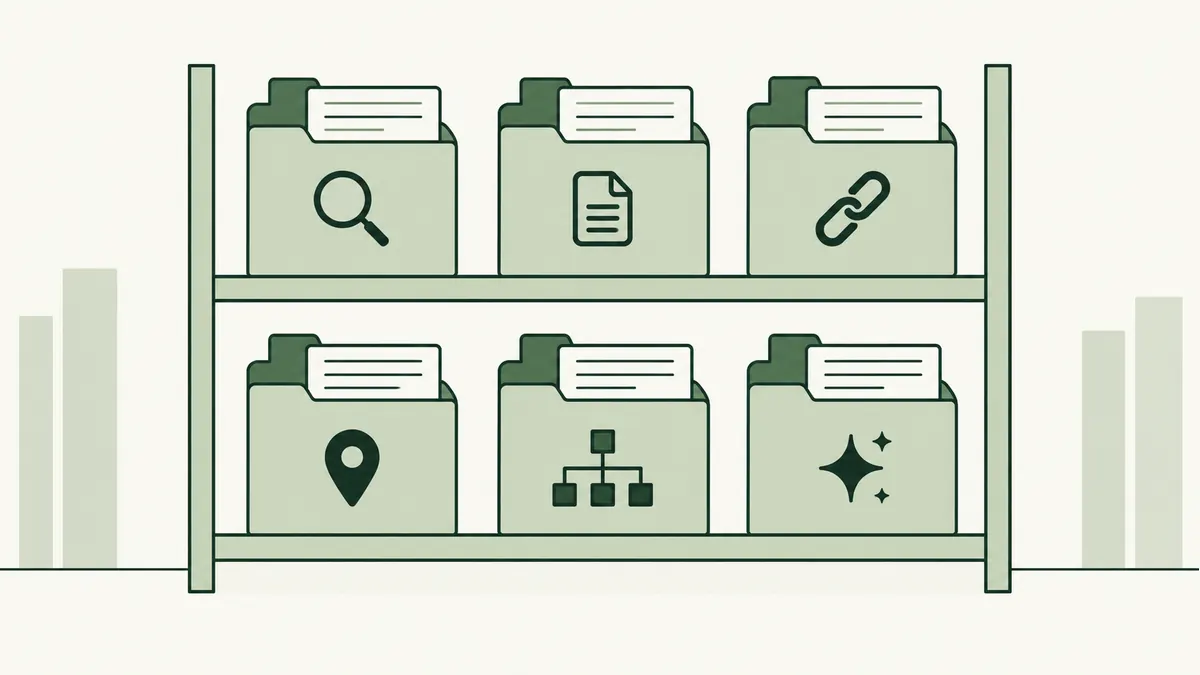
Start with a real set of questions
A bicycle shop in Penang might have an overview of choosing a commuter bicycle. Supporting guides could cover frame size, storage in an apartment and routine maintenance.
Each guide has a separate job. The overview helps someone identify the main decisions; the supporting pages explain a decision in more detail. A list of loosely related keywords is not yet a useful content structure.
Decide what belongs on one page
If a question needs only a short answer, a section within the overview may be enough. Separate pages are more useful when they need examples, instructions or substantial detail that would overwhelm the overview.
Before adding a page, check what already exists. Two articles explaining the same frame-size decision with slightly different titles may be easier to combine into one clear guide.
Use search intent to distinguish different reader tasks, rather than relying on wording alone.
Make the overview useful by itself
An overview should explain the subject, identify the main choices and show where a reader can go next. It should not be an empty page whose only purpose is to hold links.
For the bicycle shop, explain the trade-offs a commuter should consider before linking to the sizing and storage guides. Use labels that make the destination clear.
Google’s helpful-content guidance offers a useful test: does the content help its intended audience achieve their goal?
Connect the pages naturally
Link from the overview to relevant details, and from supporting pages back to the broader subject where that helps navigation. Add links between guides only when they answer a sensible follow-up question.
A storage guide might point to measuring a bicycle’s dimensions. It does not need a forced reference to every other article in the group.
Read our internal linking guide for examples. There is no need to treat a particular number of supporting articles as a ranking requirement.
Plan the whole group’s upkeep
- List the reader questions and existing pages.
- Choose a useful overview.
- Create only the missing explanations you can support.
- Check the links and page boundaries.
- Review the group when products or advice change.
A content calendar can include those reviews alongside new writing. Keep the structure small enough that the team can maintain its accuracy.