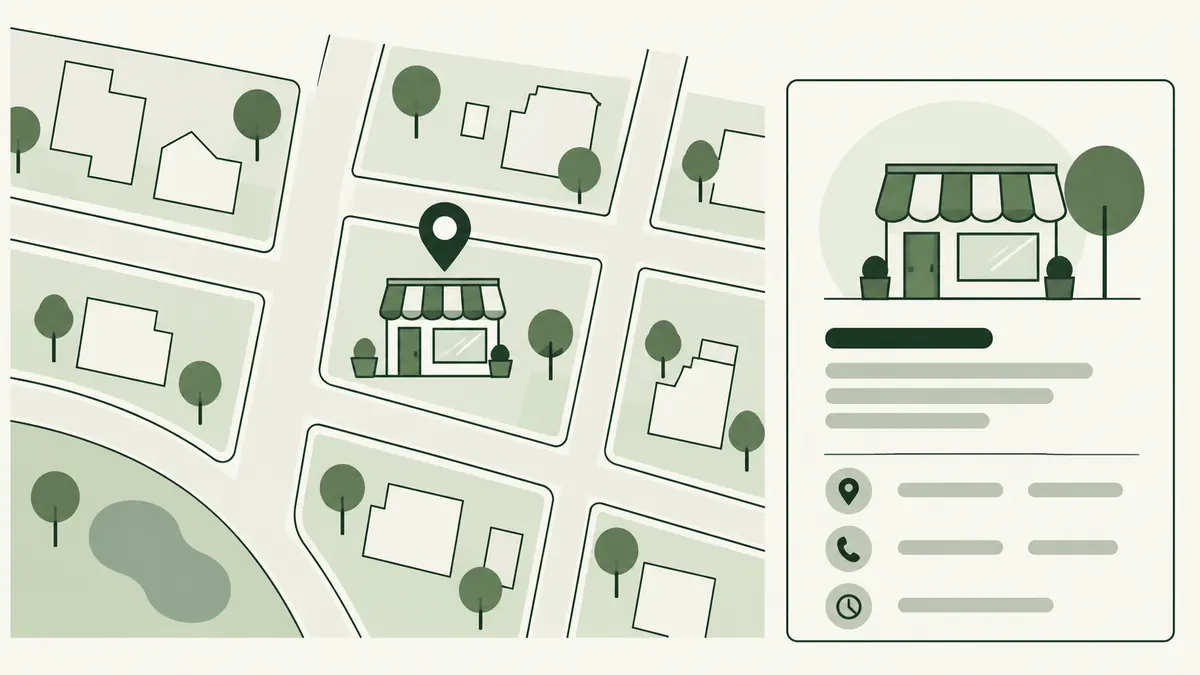
Create a reliable branch record
List each current location and the person who confirms its details. Record the address, public phone number, opening hours, available services and any appointment conditions.
A tutoring business in two towns may offer different classes at each branch. Copying one timetable to both pages creates enquiries the second branch cannot fulfil.
Give each page useful local information
Explain what a customer can do at that location. Add practical access details and current photographs where they help. Show the correct contact or booking route.
Changing only the town name in otherwise identical copy adds little value. Distinct pages should reflect actual differences and make branch selection easier.
Use the service-page guide to organise the offer clearly.
Match profiles to eligible real operations
Google’s representation guidelines explain eligibility and requirements for business locations. A website page or mailing address alone does not establish that another profile is appropriate.
Do not invent premises to appear in more areas. For teams that travel to customers, review the service-area guidance instead.
Update changes without losing track
- Assign a fact owner for each location.
- Check branch pages against current operations.
- Review special hours separately.
- Update profiles and important listings after a move.
- Plan old page routes when a branch closes.
Read the holiday-hours guide for temporary changes and the redirect guide before moving established URLs.